
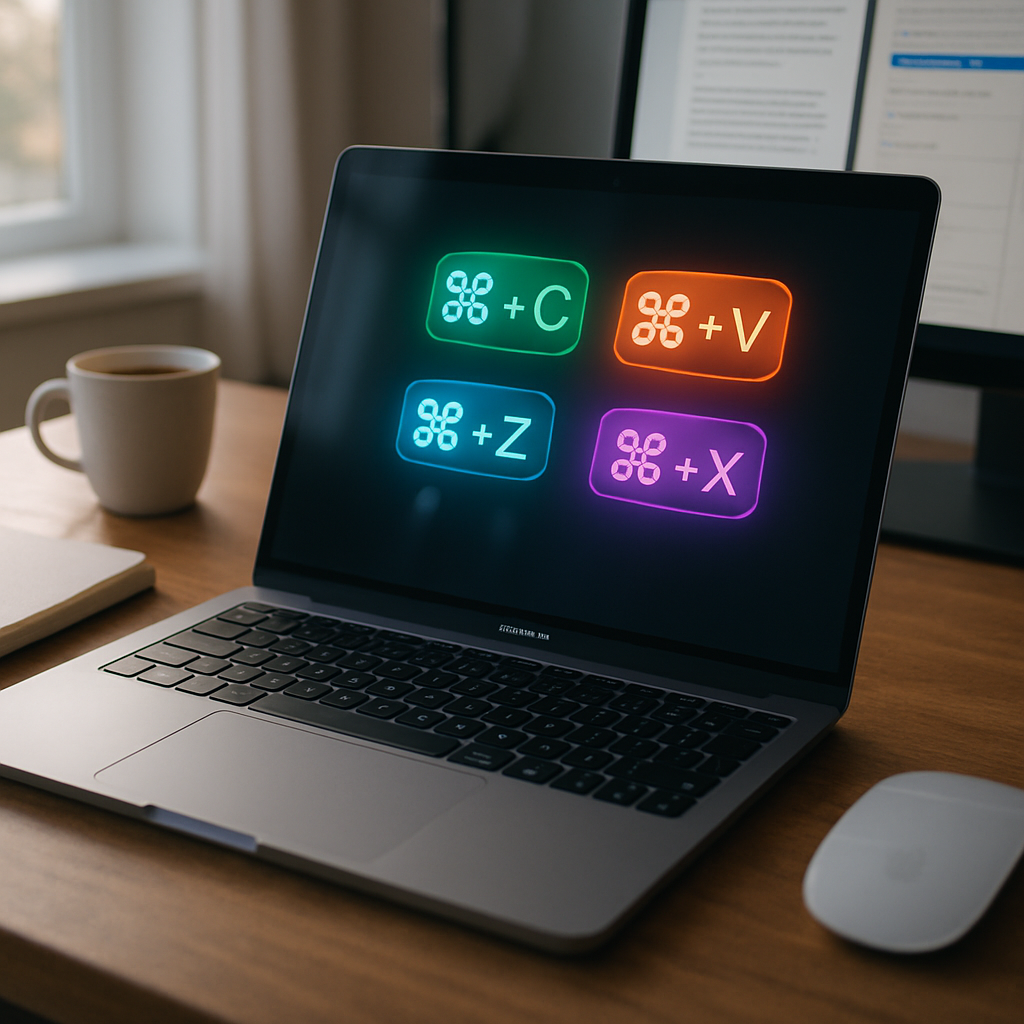
In a fast-paced digital world, keyboard shortcuts can slash your work time and boost your focus. From drafting emails to crunching data in a spreadsheet, the right keystrokes turn busywork into smooth, nearly effortless action. If you’re looking to cut clicks and keep your hands on the keyboard, you’re in the right place. This guide covers keyboard shortcuts across Mac, Windows, Excel, YouTube, and the web, with practical tips you can apply today.
Think of shortcuts as a language that speeds your actions, reduces repetitive strain, and helps you stay in flow. You’ll gain confidence as you learn to cue actions with a few keystrokes rather than a flood of mouse movements. Across platforms like macOS, Windows, iPadOS, and Chrome, the best shortcuts become second nature—you’ll notice the difference in minutes and feel it in your productivity over days.
Why Keyboard Shortcuts Matter in Modern Workflows
Keyboard shortcuts are not just tricks; they are a core skill for efficient work. They minimize context switching, reduce finger fatigue, and let you focus on problem solving rather than point-and-click navigation. In teams that rely on rapid turnarounds, shortcuts can shave minutes off repetitive tasks every hour. Over weeks and months, that time compounds into meaningful gains in output and accuracy.
Moreover, shortcuts scale across common apps and services, from word processors to web browsers. Whether you’re composing a document, editing a video, or navigating a complex spreadsheet, the right keystrokes create a smoother rhythm. As you adopt a few reliable combos, you’ll notice your cognitive load lightening, too, because you’re relying on muscle memory instead of deliberate thought for routine actions.
As a practical rule, start with universal actions—copy, paste, undo, and select all—and then layer in app-specific shortcuts. The benefits show up quickly in day-to-day tasks and become a natural part of your workflow. With consistent practice, keyboard shortcuts become a reliable ally in both personal projects and professional deliverables.
Foundational Shortcuts You Should Know
Every proficient keyboard user has a core set of actions they perform dozens of times daily. Core shortcuts across platforms include copy, paste, cut, undo, redo, select all, and find. These commands form the backbone of efficient editing and data manipulation, whether you’re in a document editor, a browser, or a spreadsheet. Mastery of these basics reduces the friction of more advanced workflows.
Beyond the basics, establishing a mental map of two dozen commonly used shortcuts accelerates your pace. For example, toggling between windows, opening new tabs, and saving work are essential capabilities you’ll rely on constantly. As you become fluent, you’ll notice a dramatic shift in how quickly you can assemble, review, and refine content.
To build fluency, practice short, focused sessions. Pick a small swarm of shortcuts you’ll use over the next 24 hours, then increase your set as you gain confidence. Regular, deliberate practice is the fastest path to turning keystrokes into second nature.
Platform-Focused Shortcuts: Mac, Windows, iPad, Chrome, Excel
Mac Keyboard Shortcuts
Mac keyboard shortcuts leverage the Command, Option, and Control keys to streamline tasks. Quick examples include Command-C for copy, Command-V for paste, and Command-T to reopen a closed tab in many browsers. For document editing, Command-S saves your work, while Command-Z undoes the last action. You’ll find Command-Shift-3 and Command-Shift-4 useful for capturing screenshots with precision.
In the Finder, Command-N opens a new window, Command-W closes a window, and Command-Tab switches between apps. For text editing, Option-Left and Option-Right move the cursor by word, while Command-A selects all. Exploring these combos in your daily apps helps you internalize a Mac-specific shortcut script that speeds up tasks across the board.
To tailor macOS shortcuts, visit System Settings > Keyboard > Shortcuts. Here you can enable and customize shortcuts for Spotlight, Mission Control, and app-specific actions. Personalizing these settings yields a more consistent, efficient workflow across your daily routine.
Windows Keyboard Shortcuts
Windows shortcuts center on the Windows key (Win) and Ctrl or Alt modifiers. Common combos include Ctrl-C for copy, Ctrl-V for paste, and Ctrl-S for save. The Win key opens the Start Menu, and Win-D shows the desktop, providing quick ways to navigate while keeping your hands on the keyboard. For multi-tasking, Windows 10 and Windows 11 users benefit from Win-Tab to switch between open apps, or Win-Arrow keys to snap windows into place.
A few productivity boosters include Ctrl-Shift-Esc to open Task Manager, Alt-Tab for app switching, and Ctrl-F to initiate a search within documents or browsers. Excel users often rely on Ctrl-Arrow keys to jump between data blocks, Ctrl-Home and Ctrl-End to jump to the sheet edges, and F2 to edit a selected cell. Tailoring these shortcuts within Windows Settings or app-specific options can streamline many workflows.
As you customize Windows shortcuts, aim for a set that aligns with your daily patterns. Consistency across apps matters, so try to reuse the same modifier combos for similar actions wherever possible. This internal consistency reduces cognitive load and accelerates habit formation.
iPad, Chrome, and Web Shortcuts
On iPad, shortcuts often combine external keyboards with iPadOS apps. Common combos include Command-C, Command-V, and Command-T for new tabs in Safari or Chrome. For document apps, Command-H dismisses the current app’s UI elements in many contexts, while Command-S saves progress in supported editors. iPad shortcuts extend your laptop-like speed when you’re working away from a desk.
Chrome shortcuts cross both desktop and mobile web experiences. Use Ctrl-L or Command-L to focus the address bar, Ctrl-T for a new tab, and Ctrl-W to close the current tab. The omnibox search and navigation shortcuts help you move through the web with minimal hand movement. These combos translate well across other browsers, helping you maintain a consistent command set as you switch between Chrome, Edge, or Firefox.
When you work with web apps like Google Docs, Sheets, or YouTube, keyboard shortcuts unlock efficient editing, navigation, and playback control. For example, YouTube shortcuts include K to pause/play, J and L to seek backward or forward, and Ctrl-Arrow for precise seeking. Learning these keeps your eyes on the content and your hands in motion.
Excel Keyboard Shortcuts for Faster Data Work
Excel is a powerhouse for data, and it rewards fast hands with a rich shortcut repertoire. Start with basic navigation like Ctrl-Arrow to jump between data blocks and Ctrl-Shift-Arrow to select entire ranges. Ctrl-C, Ctrl-V, and Ctrl-X cover copy, paste, and cut, while Ctrl-Z undoes the last action. For formatting, Ctrl-B, Ctrl-I, and Ctrl-U toggle bold, italic, and underline quickly.
Advanced Excel users leverage shortcuts like F2 to edit the active cell, F4 to repeat the last action, and Ctrl-Shift-Plus to insert new rows or columns. When working with formulas, press = to begin, then use arrow keys to navigate function arguments. Mastery of Excel shortcuts can shave hours off large workloads and keep your analysis flowing smoothly.
Shortcuts for Browsing, Apps, and Creative Tools
YouTube and Video Shortcuts
As you watch or edit videos, keyboard shortcuts keep the creative pace moving. Hit K to play/pause, J and L to rewind or fast-forward, and M to mute. For navigation, use 0-9 to jump to specific moments, or the Arrow keys to scrub frame by frame. When you’re editing in video apps, remember Alt-Drag to duplicate clips or Ctrl-Shift-Delete to cut unused segments in many editors.
These shortcuts translate well into streaming workflows, where quick playback control, captions toggles, and timeline navigation matter. You’ll find that consistent commands across platforms reduce cognitive load when you switch between editing and watching content.
After Effects, Premiere Pro, Ableton, and Other Creative Apps
Creative tools often rely on a diverse shortcut set to speed up complex tasks. In After Effects, for example, spacebar plays or pauses, and Ctrl-Alt-Shift-K opens the Keyframe Editor in some configurations. Premiere Pro users benefit from Ctrl-K to add a cut, Ctrl-S to save, and Ctrl-M to export a sequence. In Ableton Live, the arrangement and session views respond to a variety of key combos for looping, recording, and playback control.
Blender, AutoCAD, and similar design tools also reward familiarity with shortcuts like G (grab), R (rotate), and S (scale) in 3D software, or C (circle select) and B (box select) in modeling environments. AutoCAD shortcuts accelerate drafting and precision work, but the core idea remains the same: build a small, repeatable set of commands you trust and rely on daily.
Customization, Accessibility, and Troubleshooting
Customizing Shortcuts for Your Needs
Custom shortcuts let you tailor a workflow that mirrors your natural rhythm. On Mac, you can remap commands via System Settings > Keyboard > Shortcuts, or use the Shortcuts app to create automation routines. Windows users can assign new shortcuts within apps, or leverage third-party tools to build global shortcuts that trigger multiple actions with a single keystroke. The goal is a cohesive, predictable pattern you don’t have to think about twice.
When tailoring shortcuts, choose actions you perform frequently and align their key combinations with your existing habits. For example, if you frequently switch between documents, a single global shortcut to toggle between the two most-used apps can be a game changer. Consistency across apps is crucial; it makes your muscle memory transfer more smoothly from one tool to another.
Accessibility and Precision Shortcuts
Keyboard shortcuts also play a vital role in accessibility. For some users, shortcuts reduce the need to navigate with a mouse, easing strain and increasing speed. Most shortcuts have alternative keystroke paths (for example, using Command instead of Control on Mac vs. Windows) that you can adopt to fit your needs. If you rely on screen readers or magnification, many shortcuts remain compatible and can be customized for easier use.
Accuracy matters, too. For tasks like data entry, precise shortcuts for copying, pasting values, and navigating cells or fields reduce the chance of errors. Take notes on which shortcuts you reach for most and consider keeping a lightweight printable cheat sheet near your workspace for quick reference during busy sessions.
Common Shortcuts Not Working? Quick Troubleshooting
Shortcuts can fail for several reasons, including conflicting hotkeys, app updates, or keyboard layout changes. A practical first step is to test the shortcut in a blank document or a different app to isolate the problem. If a browser shortcut isn’t functioning, try disabling extensions that might steal the key combo or reset browser settings to default.
Another frequent culprit is an input language or keyboard layout switch. Ensure the active layout matches the intended system or app configuration. When in doubt, restarting the app or the device often resolves transient conflicts, and updating software can fix known shortcut issues tied to recent changes.
Building a Shortcut Habit: Practice, Patrol, and Progress
The best shortcut strategies start small and scale up. Begin by selecting three universal shortcuts you’ll use today, and commit to practicing them for the next week. As muscle memory grows, add a few shortcuts from your most-used apps. This steady, deliberate growth prevents overwhelm while delivering measurable gains.
Integrate shortcuts into your daily rituals. Before writing a document, pause to consider which keystrokes will save you time. When reviewing data in a spreadsheet, rely on navigation and editing shortcuts to keep your hands moving. Over time, your workflow will feel less mechanical and more fluid, with shortcuts acting as the underlying rhythm.
Best Practices for a Sustainable Shortcut Workflow
Consistency matters more than complexity. Try to reuse the same keys for similar actions across apps, and keep your shortcut set reasonably small at first. Use a dedicated place to record new shortcuts you learn, whether a notes app or a printable crib sheet that you can pin near your workspace. Regular reflection on what works and what doesn’t helps you refine your personal shortcut system.
Finally, celebrate small wins. Each time you perform a task in fewer keystrokes, you’ve added efficiency to your day. Over weeks and months, those small wins accumulate into a powerful productivity habit that supports both speed and accuracy.
Embrace the idea that keyboard shortcuts are not a single trick but a mindset: a continuous practice of optimizing how you work. With deliberate, incremental changes, you can unlock a level of flow that makes complex tasks feel almost effortless. Start with three core shortcuts today, and you’ll see a measurable lift in your daily performance. The goal isn’t to memorize every keystroke at once, but to build a reliable toolkit you can rely on, across Mac, Windows, Excel, YouTube, and the web, no matter where your work happens.